
Mathematics
Explore how the school builds strong Maths skills through hands-on learning and problem solving. Parents can also support their child's learning at home.
Our Vision
We aim to provide stimulating mathematical experiences that will nurture creative, critical, active, independent and future-ready learners with sound reasoning and problem solving skills.
Our Philosophy
“Every Girl can Learn and Achieve in Mathematics given the right environment to stretch her potential”
Mathematical problem solving is central to mathematics learning. Problem solving skills in the mathematics curriculum mirror twenty-first century skills such as creative thinking, communication and critical thinking skills which we would need to equip our students with. The inherent ‘spiral’ nature of the mathematics curriculum will remain an important aspect of mathematics learning in developing our students' problem solving abilities to become future-ready learners.
Curriculum
To develop a strong foundation in Mathematical concepts and skills, the school adopts the Concrete - Pictorial - Abstract approach in the teaching and learning of Mathematics. This pedagogy enables gradual translation of concepts from actual objects to pictures to symbols.
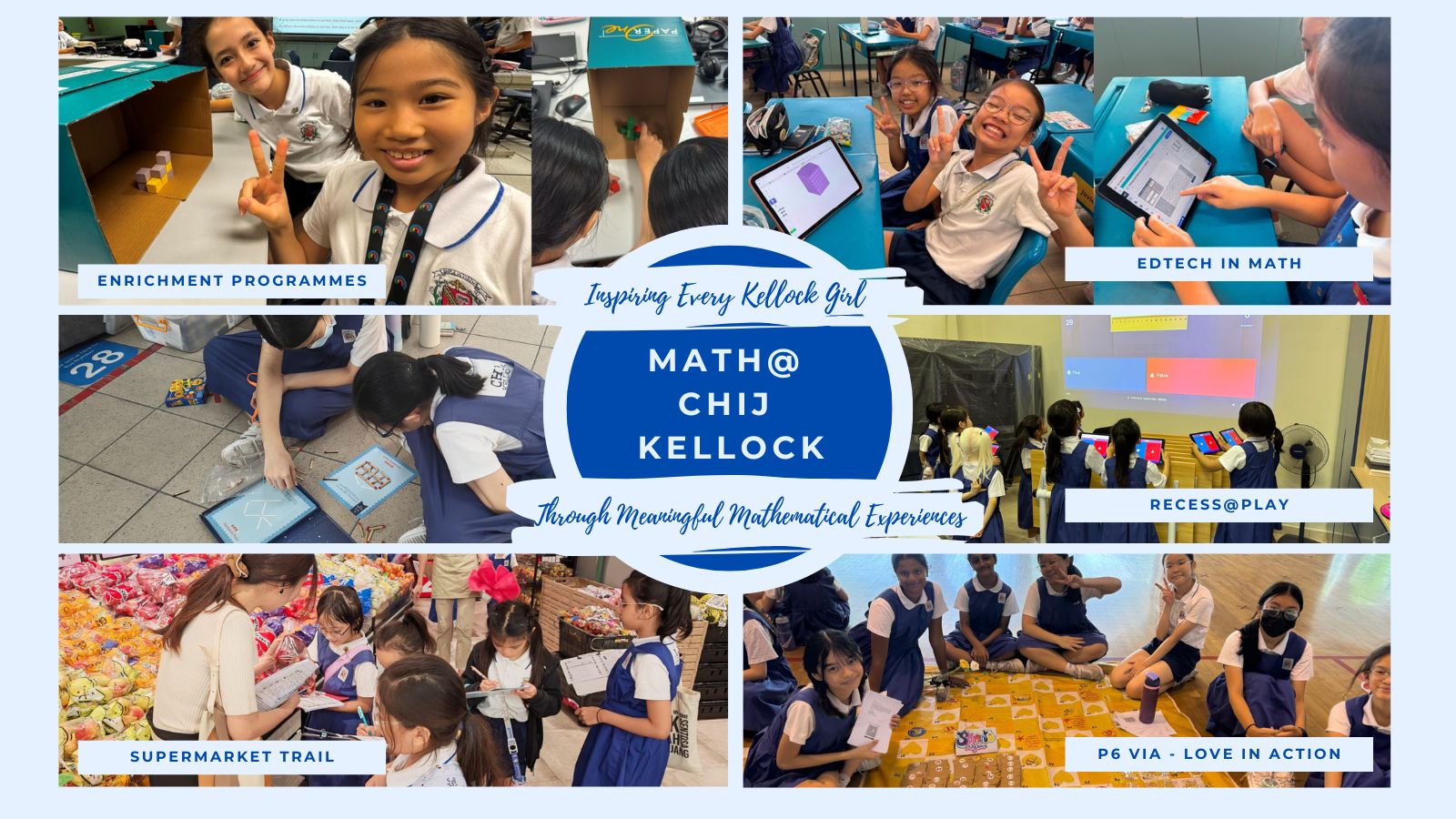
To bring mathematics learning beyond the textbook and beyond the classroom, the school offers Authentic and Experiential Learning to all the girls. Such learning experiences would allow the girls to apply and see the relevance of learning mathematics as well as make connections to what they are learning.
To provide opportunities for our girls to discover, reason and communicate mathematics, our teachers engage the girls through Cooperative and Independent Learning using various strategies and activities. Through such experiences and peer interaction, we hope to develop self-directed learners who are positively confident in mathematics learning.
In addition, educational technology is thoughtfully infused into lessons to provide engaging opportunities for students to explore, collaborate, and deepen their learning.
Key Programmes
K-JINGLES (Financial Literacy @ Kellock)
The Financial Literacy curriculum in Kellock can be categorised into three broad areas:
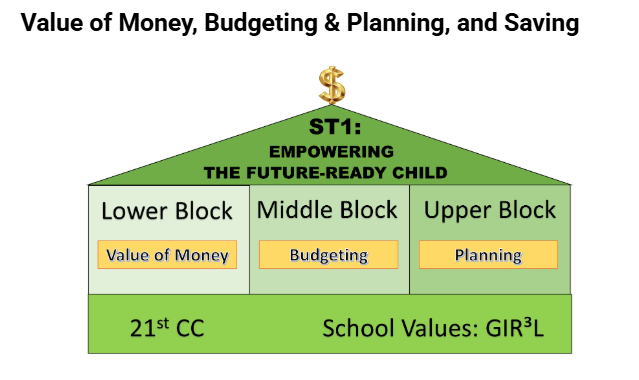
From P1 to P6, students will learn about and demonstrate ways to monitor how money is spent and saved during Financial Literacy lessons.
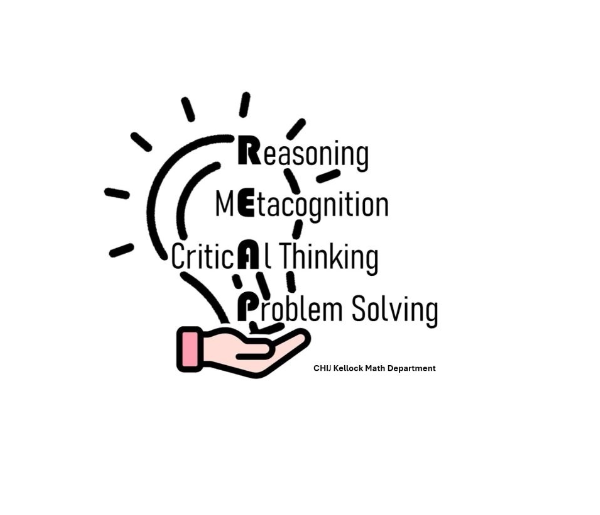
Problem Solving Package: REAP Booklet
To equip and develop students with reasoning, metacognition, critical thinking and problem solving skills in Mathematics, the school has adopted the Polya Model for Problem Solving. Using the acronym, UPER, we hope to scaffold students’ thinking process in their approach to problem solving.
Key Mathematical Experiences
Working Hand in Hand
Parents can help your child at home by:
Practising number bonds and multiplication tables frequently
Connecting real-life experiences with mathematical topics:
Money - Allowing students to use cash to pay for items and getting change
Time - Telling time from an analogue clock
Time - Duration (e.g. use of a TV guide)
Measurement - Provide opportunities for students to help in the kitchen
Encouraging your child to do quick mental calculations